The dataset is large, not universal
It combines UK veterinary, insurance, registry and welfare records. Geography, access to care and source selection shape the population.
Kindspan population report
A breed median feels personal because it comes with a number of years. But this study is most useful when the number stays attached to the dogs behind it, the method that produced it and the uncertainty around it.
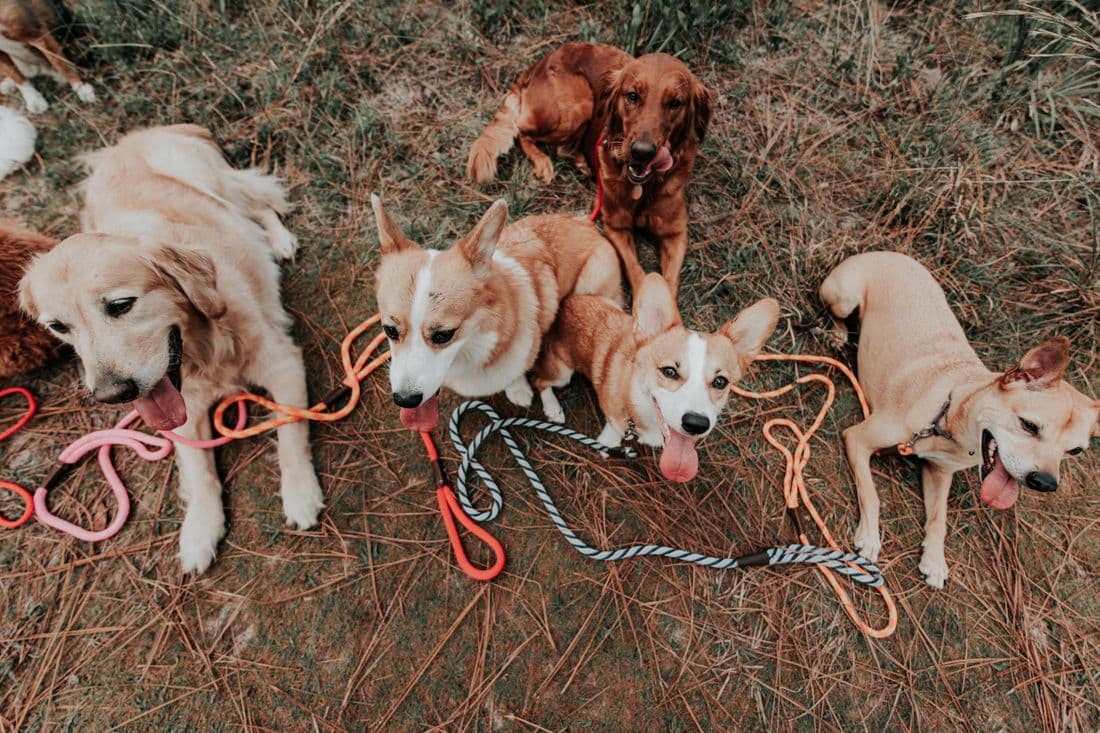
The 2024 Scientific Reports study analyzed 584,734 UK dogs, including 284,734 that had died, across 155 breeds. It found a median survival of 12.5 years across all dogs in the study and meaningful variation by breed, body size, skull shape, sex and evolutionary clade. Small, long-nosed dogs generally had higher medians; some large and flat-faced groups had lower medians. The results describe populations, not an individual dog’s prognosis.
How to read it
It combines UK veterinary, insurance, registry and welfare records. Geography, access to care and source selection shape the population.
Half of the source population outcome lies on either side under the study method; the median isn’t a lifespan ceiling or personal deadline.
Breed, size and face shape travel with many genetic, developmental, environmental and healthcare factors the study can’t fully untangle.
Population data explorer
Population estimates from the cited 2024 UK study.
A confidence interval describes uncertainty around a population estimate. It isn’t a range of possible lifespans for an individual dog.
The headline findings
Each result describes the source population. Use it to ask better population and care-planning questions, never to predict one dog’s remaining years.
This is the midpoint across the entire analyzed population, not the expected age for every breed or dog.
The reported purebred median was 12.7 years and crossbred median 12.0 years.
The crossbred category combines highly diverse dogs and doesn’t establish a causal benefit of pure breeding.The study found a small population difference by sex.
It doesn’t show that sex alone determines an individual outcome.Body-size categories showed a broad gradient consistent with prior canine longevity work.
Brachycephalic dogs showed lower survival than mesocephalic and dolichocephalic groups in the study.
The analysis reported estimates across 155 breeds, with confidence intervals and source sample sizes that should accompany any quoted number.
Some phylogenetic groups showed different survival profiles, suggesting that breed history and linked traits deserve deeper study.
The researchers combined UK data from breed registries, veterinary corporations, pet insurance, welfare organizations and academic datasets.
Of the 584,734 unique dogs, 284,734 were recorded as deceased. That breadth gives the study unusual power for breed comparisons. It also introduces selection: insured dogs, registered breeds, charity populations and veterinary patients don’t represent every UK dog in the same way.
The authors used survival analysis instead of simply averaging ages at death. That matters because the dataset also contains living dogs whose eventual age at death hasn’t been observed.
A raw average of recorded deaths can be biased toward animals already old enough to die and by how long each dog was observed.
Kaplan–Meier methods use time-to-event information and account for censored observations. The resulting median is the age by which the estimated survival curve reaches 50 percent.
A confidence interval expresses uncertainty in that estimated median. It isn’t the range in which individual dogs will live, and a large sample can’t remove bias from who entered the dataset or how variables were recorded.
A breed label carries body size, skull shape, genetic diversity, disease predispositions and human selection history all at once.
The associations can’t isolate one cause for a breed’s median, and an individual dog may not follow the group curve. Variation within a breed remains substantial.
The practical use is proportionate planning: understand known breed risks, establish preventive baselines and pay closer attention as a dog reaches the later part of the breed or size distribution. A remaining-years countdown is the wrong use of the data.
| Study measure | What it means | What it doesn’t mean |
|---|---|---|
| Median survival | Population midpoint under the study method | Expected death age for an individual |
| Confidence interval | Uncertainty around the population estimate | Range of possible individual lifespans |
| Breed association | Group-level survival difference | Proof of one genetic cause |
| Hazard comparison | Relative event rate in modeled groups | Guaranteed risk for one dog |
Population results can support earlier conversations about screening, mobility, body and muscle condition, cognition and home preparation.
A breed survival table doesn’t validate a supplement, diet, peptide or longevity program. Showing that an intervention extends life requires an appropriate controlled study of that intervention and outcome.
Kindspan presents source, median, confidence interval and sample together. Their decision value is context: when to establish a stronger baseline and which changes deserve closer attention.
Questions the data raises
In this 2024 UK study, the estimated median across all included dogs was 12.5 years. Breed, size and other group medians varied, and the number isn’t a prediction for an individual dog.
Purebred dogs had a higher median than the broad crossbred category in this dataset. That descriptive result doesn’t prove pure breeding causes longer life or apply uniformly to every dog.
Several small and long-nosed breeds had high reported medians, but rankings should always include source population, confidence intervals and sample sizes.
Source ledger
Guidelines, regulators, systematic reviews and primary population studies take precedence over commercial summaries and anecdotes.
From reading to preparation
Build a free Kindspan plan around your dog’s age, daily-life baseline, health history and the changes you want to discuss.
Build my dog’s free plan