Calories are the starting point, not the conclusion.
Resting energy requirement estimates basic energy use; a life-stage factor creates a broad daily range.
Published factors vary because activity, neuter status, age, environment and individual metabolism vary. Kindspan shows a range instead of pretending the midpoint is exact.
Puppies, pregnancy, lactation, working-dog loads, major weight loss and disease-specific nutrition are outside this calculator.
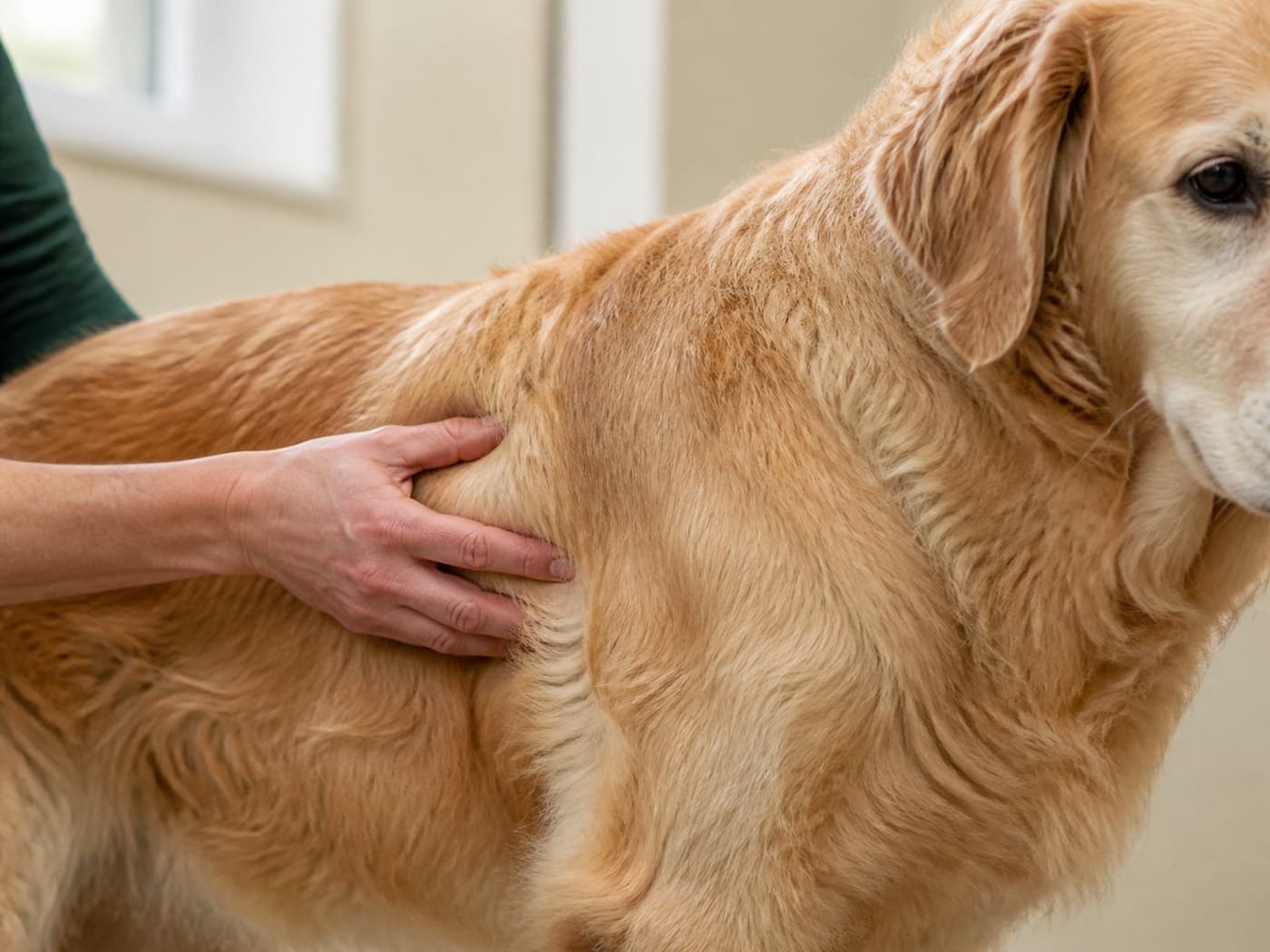
A stable weight can hide muscle loss.
Body condition estimates fat; muscle condition looks for loss over the skull, shoulders, spine and pelvis.
A dog can carry excess fat while losing clinically important muscle, so the two scores should never be collapsed into one.
Repeatable neck, chest and abdominal measurements can add a longitudinal trace when posture, tape placement and tension stay consistent. They do not calculate body condition or body fat, and their validity for tracking body-composition change still needs study.
Record body and muscle condition with the same method. New muscle loss, unintended weight loss or difficulty eating deserves cause-focused veterinary assessment rather than an automatic food change.
Food-label calories turn the estimate into a measurable amount.
The label’s kcal per cup, can, pouch or kilogram connects the range to what is actually served.
Measure the current amount before changing it. Include treats, chews, toppers and table food; small extras can materially change the total.
A cup estimate says nothing about food quality or whether the diet is appropriate for a particular medical condition.
Recheck the dog before changing the number again.
Use the same scale, repeat both condition scores, and record appetite, stool, energy and activity.
The target rate of change and follow-up interval depend on the starting condition and health plan.
Abrupt restriction can be unsafe. A measured trend is more useful than repeatedly recalculating from a new guess.